
Infrastructure Decisions Last Decades: Why Fleet Charging Planning Needs a Long-Term View
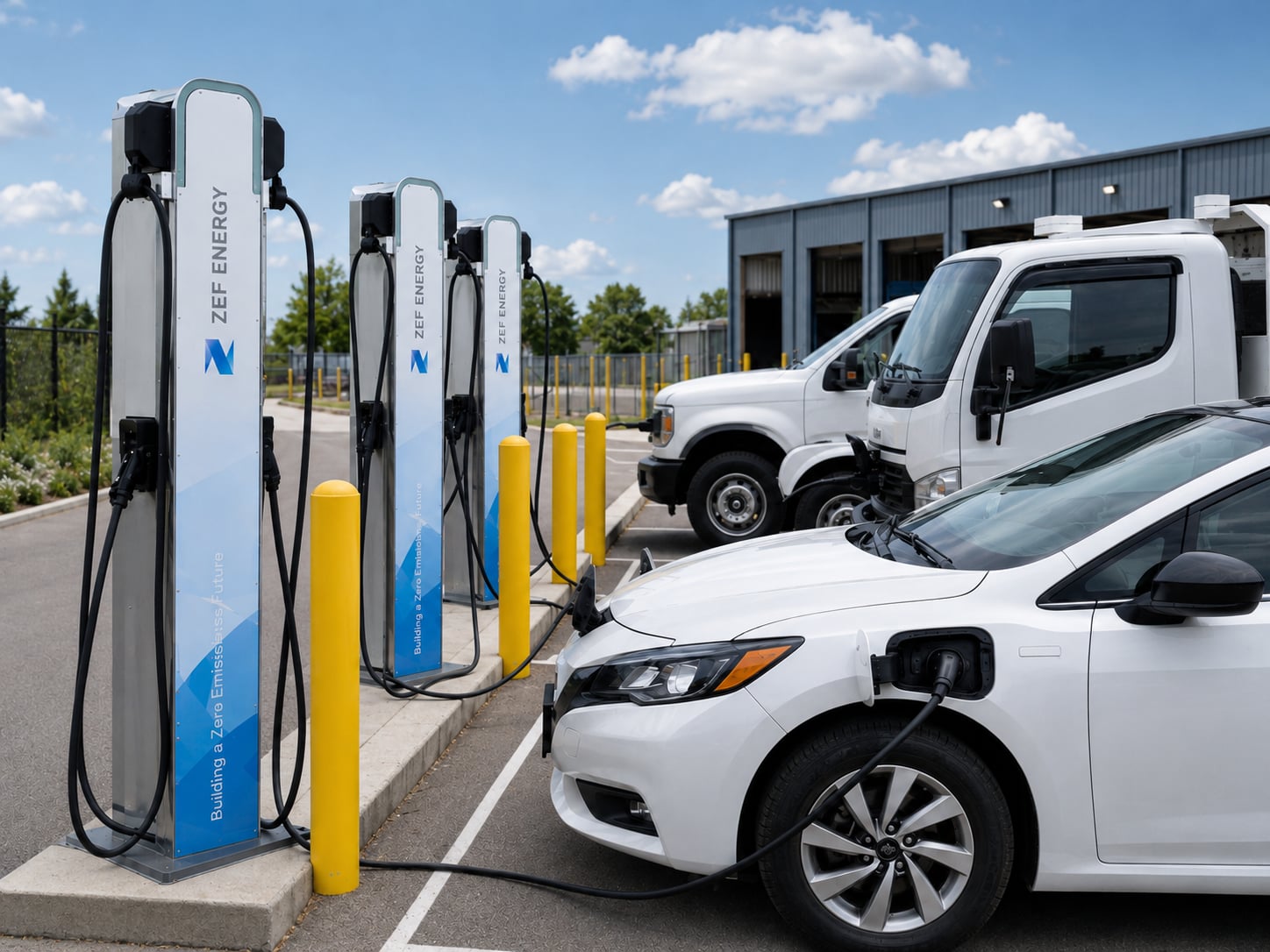
Infrastructure decisions made today can shape fleet operations for the next ten years.
That's not a warning. It's the case for investing in the planning work upfront.
For fleet managers, operations directors, facilities teams, municipal buyers, and infrastructure planners, EV charging has moved beyond a simple procurement decision. It's now an operational infrastructure decision, and the design choices made before installation can affect reliability, expansion costs, utility coordination, reporting, and day-to-day fleet readiness for years to come.
Many EV charging projects begin with a narrow question: how many chargers do we need right now? That question matters, but it isn't sufficient on its own. Fleet electrification rarely stops after the first vehicle order. Vehicle counts grow, vehicle types change, utility rates evolve, software expectations rise, and reporting requirements get more detailed. A site built to work for today's fleet can become expensive to modify later if flexibility wasn't built in from the start.
What Flexibility Actually Looks Like
Flexibility isn't about overbuilding or installing more than an organization currently needs. It's about making decisions today that keep options open tomorrow, so growth doesn't force a full redesign.
For the teams responsible for keeping fleets running, that flexibility usually comes down to four things: how well the system manages load, how the site is designed for future capacity, how scalable the hardware is, and how well the utility rate structure supports growth. Each one is a lever an organization can pull now to avoid costly rework later.
Load Management Systems
Load management is often the difference between a site that scales smoothly and one that hits a wall.
As vehicle counts grow, so does the demand placed on the site's electrical capacity. Without active load management, that growth can trigger costly panel upgrades or force organizations to cap the number of vehicles they can charge at once. A well-designed load management system distributes power intelligently across chargers, prioritizes vehicles based on operational need, and helps avoid demand charges tied to peak usage.
For facilities and operations teams, this means fewer surprises on the utility bill and more predictable charging schedules, even as fleet size increases. It also means the site can support more vehicles on the same electrical service for longer, delaying (and sometimes eliminating) the need for expensive infrastructure upgrades.
Site Design for Future Capacity
A site designed only for today's charger count can become a bottleneck the moment the fleet grows.
Before finalizing electrical design, organizations should model future vehicle counts, expected adoption timelines, duty cycles, and charging windows. A fleet that starts with light-duty vehicles may later add medium- or heavy-duty vehicles, and that shift alone can change power requirements, parking layouts, and charger placement.
Planning for capacity doesn't mean installing every charger on day one. It means reserving conduit pathways, panel headroom, and physical space so that adding chargers later is a straightforward project, not a full site redesign. For municipal buyers and facilities teams working within fixed budgets, this approach protects today's spend while keeping tomorrow's expansion affordable.
Scalable Hardware
Hardware decisions made now can either support future growth or quietly limit it.
Fleet operators should evaluate whether charging hardware can support changing needs: data visibility, reporting, driver access, maintenance workflows, and future equipment additions. Open standards matter here. Hardware built on open protocols and hardware-agnostic charging management platforms gives organizations more freedom to add chargers, switch vendors, or integrate new software down the road, without being locked into a single manufacturer's ecosystem.
For infrastructure planners, this is one of the clearest ways to protect a long-term investment. Choosing scalable, standards-based hardware today avoids the cost and disruption of replacing incompatible equipment later.
Utility Rate Structures That Support Growth
The utility relationship shouldn't be treated as a one-time interconnection task.
For fleet charging infrastructure, the utility relationship affects service capacity, rate structure, interconnection timelines, demand charges, and managed charging options. Organizations that plan well bring the utility into the conversation early, using that relationship to understand what the site can support today, what upgrades may be needed later, and how charging behavior will affect long-term operating costs.
Rate structures matter just as much as hardware. Time-of-use rates, demand response programs, and managed charging incentives can significantly change the economics of a fleet charging deployment. Operations directors and facilities teams that understand these structures early can design charging schedules that avoid peak demand charges and take advantage of lower-cost windows, often reducing operating costs for the life of the site.
Why This Matters
Infrastructure decisions have long tails.
A charging site designed around only today's procurement timeline may meet the immediate requirement, but it can create real operational challenges later: limited expansion options, expensive retrofits, utility delays, software constraints, or higher operating costs.
A site designed with flexibility in mind supports a more stable electrification roadmap. That doesn't mean predicting every detail perfectly. It means building a system that can adapt as fleet needs change.
A Better Planning Question
Instead of asking only "how many chargers do we need today," fleet teams should ask: how do we design charging infrastructure that can support our operations for the next decade?
That single shift changes the entire planning process. It connects load management, site design, hardware selection, and utility rate structures into one long-term infrastructure strategy.
Build for Today. Scale for Tomorrow.
The most durable charging deployments are built with future operations in mind. They manage load intelligently. They reserve capacity for growth. They select hardware that can evolve. They plan around utility rate structures that support long-term operating costs.
A flexible infrastructure picture starts with the decisions made before the first charger is installed.
Planning a fleet charging deployment? ZEF Energy can help your team think through load management, site design, scalable hardware, and utility rate structures before the first charger goes in the ground.